
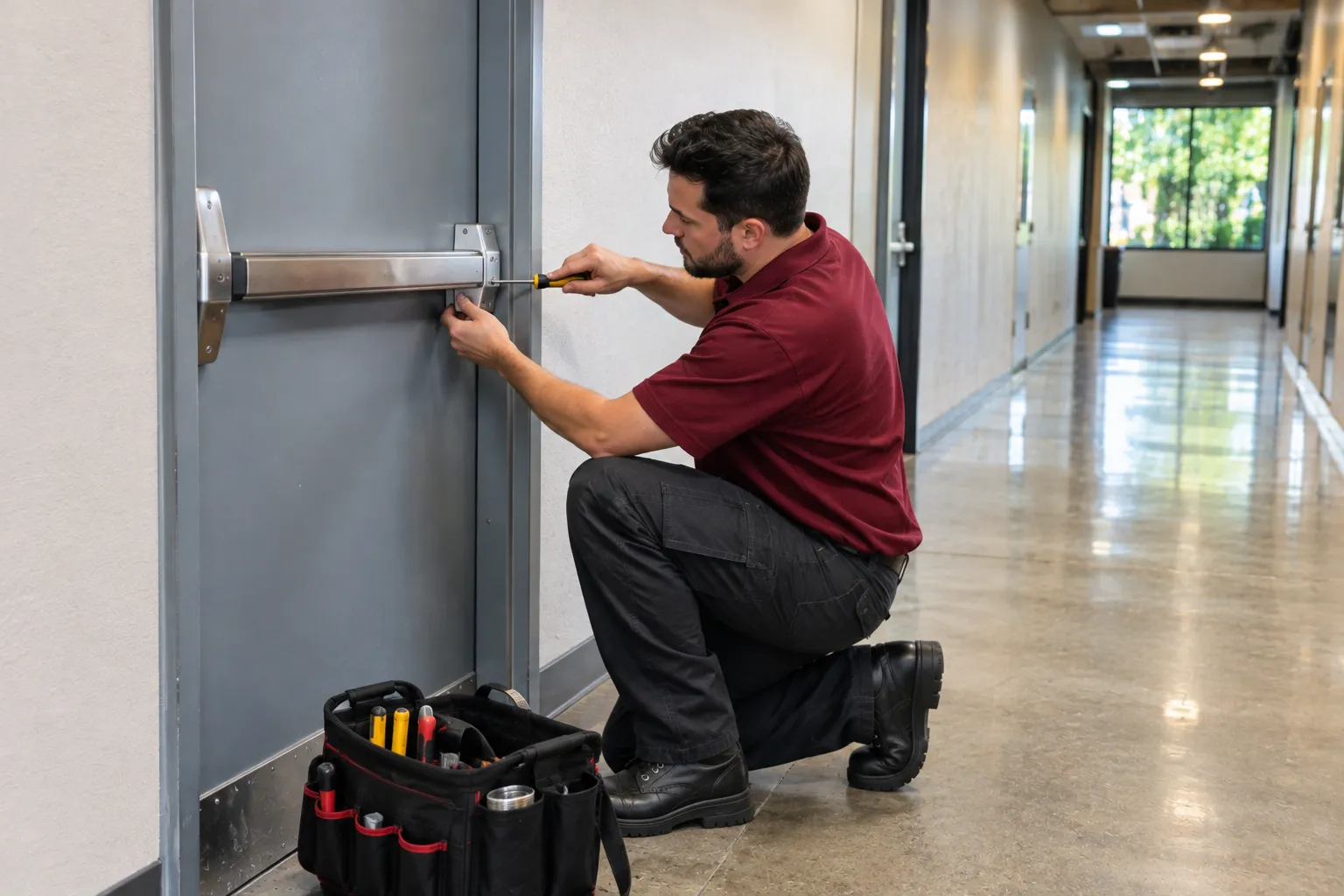
What the push bar actually does
A panic bar or exit device releases a door when someone pushes the bar from inside. The person leaving does not need to turn a key or operate a separate handle.
This hardware is familiar on commercial exits throughout Las Vegas, from retail spaces to warehouses and offices. Von Duprin introduced the first panic bar in 1908. The basic purpose remains the same: one push releases the door.
The device is only one part of the opening. The latch, strike, hinges and door alignment all affect how the assembly works. A bar can move normally while the door still fails to latch after closing.
That distinction matters when reporting a problem. Tell the locksmith whether the bar is difficult to press, the door fails to open or the latch does not engage after the door swings shut.
Know the three common device types
Exit devices are built around different latching arrangements. A replacement must match the door and the hardware application rather than simply resemble the old bar.
- Rim device: A surface-mounted assembly with a latch at the edge of the door.
- Mortise device: An exit bar connected to a lock body fitted inside a prepared pocket in the door.
- Vertical rod device: An assembly that secures the door through latching points at the top and bottom.
Each has different servicing and replacement considerations. The door’s construction, existing preparations and latching arrangement determine what hardware can be fitted.
For a property manager, identifying the type is useful when requesting service. During office hours, customers can text Cairn photos of the door and hardware to help describe the problem. Do not send access codes or identification images.
Recognize the signs of a failing device
A bar that sticks when pressed needs inspection. So does one that moves but fails to retract the latch consistently. Wear, door alignment and damaged components can produce similar symptoms.
Another common complaint is that the door opens normally but will not relock when it closes. The exit device may be working while the latch and strike no longer meet correctly.
Check the behavior of the complete door without attempting to dismantle the hardware. Observe whether the device releases when pushed, whether the door swings freely and whether it latches after closing.
A dragging storefront door or loose hardware can affect the same opening. Treating the bar as the only component may miss the condition causing the fault.
Protect the fire-rated door assembly
Some commercial doors are fire-rated assemblies. Their rating depends on more than the door leaf. The frame, hardware and installation are part of the assembly.
On these doors, replacement hardware must maintain the existing rating. Cairn replaces exit devices like for like where the application permits. A different bar or altered latching arrangement is not automatically an acceptable substitution.
Cairn never guarantees code compliance. If a door needs evaluation by a fire door inspector or the fire marshal, Cairn tells the customer.
Keep any existing door and hardware records available for inspection. They help establish what is installed before replacement options are discussed.
Arrange service around the building
For scheduled commercial repairs, the locksmith examines the door, identifies the device and prepares a written recommendation. After approval, the work can be arranged outside normal business activity when needed.
The technician checks operation with the manager after installation or adjustment. The bar should release the latch, the door should move freely and the closed door should latch as intended.
For properties with several openings, an annual or twice-yearly maintenance visit can include exit devices, closers, locks and hinges. Findings are recorded door by door, with repairs identified separately.
If an exit door fails to release or latch properly, call Cairn and describe what the door is doing. A technician can inspect the complete opening and identify the hardware that needs attention.