
What changes when a lock is rekeyed
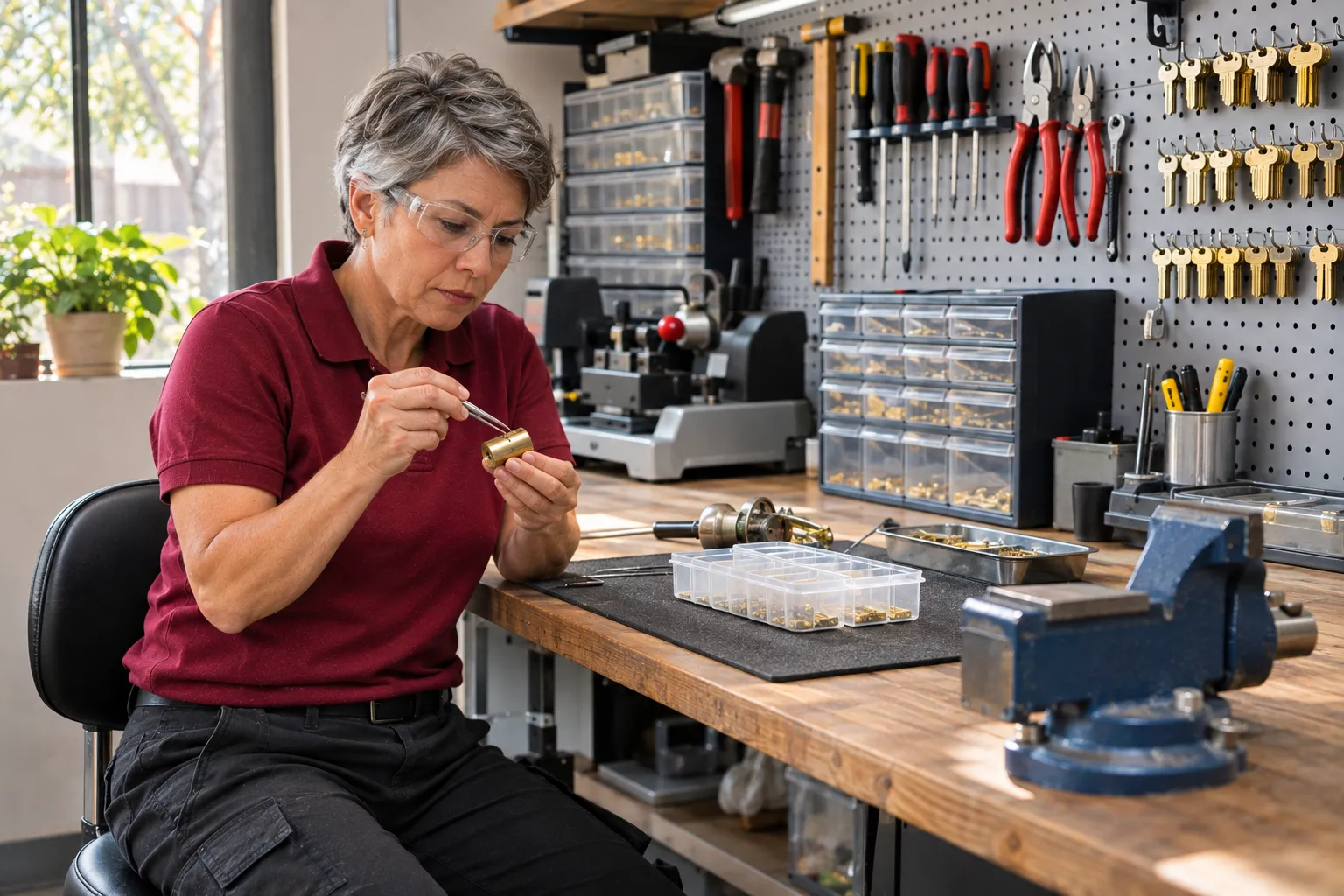
Rekeying changes the pins inside a lock cylinder so a new key operates it and the old keys no longer work. The lock body, handle, deadbolt and finish stay on the door. It is a practical choice when you want to change who holds a working key without changing hardware that still does its job.
Consider a house with three exterior doors. If the locks are in good condition, a locksmith can inspect their cylinders, determine which can be rekeyed and supply new keys. Compatible keyways may also allow several doors to work with one key. Different keyways cannot necessarily be combined.
At Cairn Lock & Key, rekeying is $22 per cylinder, plus the separate $39 service call fee. The technician confirms the work and gives you a written price after inspecting the locks. Not every lock accepts rekeying.
Signs that replacement makes more sense
A new key cannot repair a worn cylinder or make a low-grade deadbolt stronger. If the key catches, the bolt does not move smoothly or the lock has visible damage, the technician needs to find the cause before recommending rekeying.
Replacement is worth considering when you find:
- A cylinder with worn or damaged internal parts.
- Corrosion that affects the lock’s operation.
- Hardware that no longer latches or locks correctly.
- A basic lock you want to upgrade to a higher grade.
- A handle or deadbolt you want in another style or finish.
- A mechanical lock you want to replace with a smart lock.
Not every difficult door needs a new lock. In Las Vegas, heat can expand metal doors and frames until a bolt binds against its strike. An alignment problem may need hardware adjustment rather than cylinder replacement.
Understand the grade before upgrading
Locks carry ANSI/BHMA grades that distinguish different levels of hardware performance. Grade 1 is the highest of the three grades and is used for commercial and heavy residential applications. Grade 2 serves residential and light commercial doors. Grade 3 is basic residential hardware.
Moving to a higher grade means selecting different hardware, not changing the pins in the lock you have. The door and frame matter too. A residential deadbolt should extend a full 1 inch into the frame, with a reinforced strike plate secured by 3 inch screws reaching the wall stud.
A locksmith can check whether the existing door preparation accepts the replacement hardware. Choosing a grade without inspecting the door may leave an installation problem unresolved.
Let the condition of the door decide
Before spending money on replacement, have each exterior door checked with the door both open and closed. The technician looks at the cylinder, bolt, latch, strike and alignment. A lock that turns freely with the door open but binds when closed may point to the door or frame rather than the cylinder.
Sun-facing doors in the Las Vegas valley take considerable heat. Dust also collects in keyways, particularly on exterior gates. Those conditions can affect how hardware operates over time.
After inspection, you may find that some locks need rekeying, others need adjustment and one needs replacement. There is no reason to treat every door the same when their conditions differ.
Cairn provides a written price before starting. Replacement hardware is priced separately, and no drilling or replacement proceeds without approval. When the work is finished, the technician tests the new keys and checks that the door latches and locks correctly.