
What changed when car keys got chips
Older vehicles used plain metal keys. The grooves and cuts matched the ignition lock, and turning the key operated the ignition. There was no electronic key recognition step.
Most vehicles made since the late 1990s use a transponder chip. The chip communicates with the vehicle’s immobilizer system. If the vehicle does not recognize the chip, a correctly cut key may turn the ignition without starting the engine.
That difference matters when ordering a replacement. Cutting the metal blade and programming the electronics are separate parts of the job. A key can look identical to the original and still be unusable until the vehicle accepts it.
The five key types you will encounter
Drivers often call every electronic key a fob, but the distinction matters when identifying the replacement.
- Plain metal key: A mechanical key without a transponder chip.
- Transponder key: A metal ignition key containing a chip recognized by the vehicle.
- Remote head key: A key blade with remote lock and unlock buttons built into the head.
- Key fob: An electronic remote used for vehicle functions, sometimes paired with a separate ignition key.
- Smart key or proximity fob: An electronic device recognized by a compatible vehicle without inserting a blade into the ignition.
A vehicle with push-button start generally uses a proximity system. The fob must be recognized by the vehicle, even though the driver does not turn a conventional ignition key.
Why programming is part of replacement
Electronic keys must be matched to the vehicle’s security system. A blank key or replacement fob is not automatically recognized simply because it fits the same model.
When a working key is available, a technician can use it during the process of adding another compatible key. When every key is missing, the key must be originated by code or from the lock, and the vehicle’s computer must be programmed from nothing.
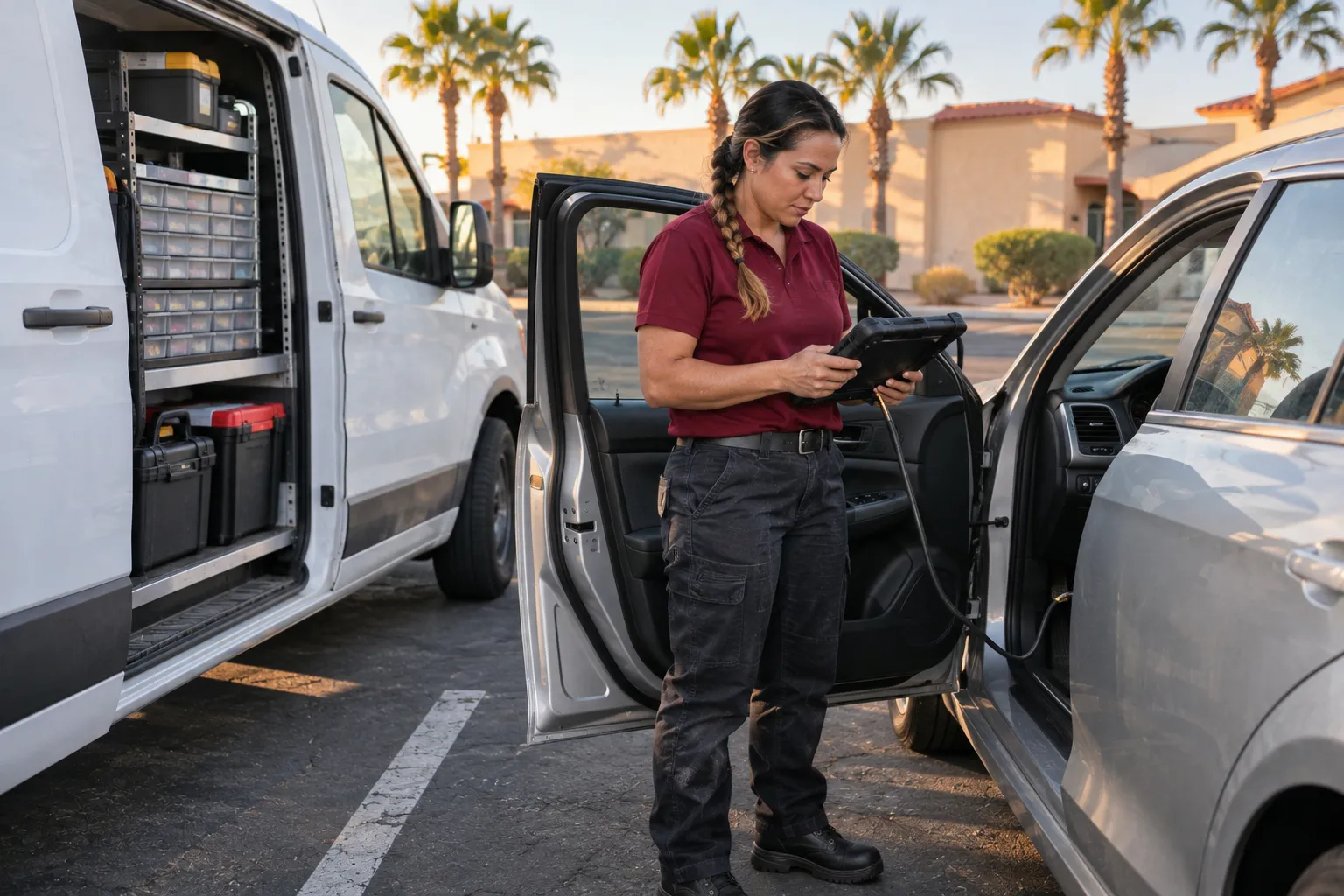
Cairn cuts and programs supported vehicle keys at the vehicle. Its mobile equipment handles most domestic and Asian makes from 1998 onward. Many European makes, including BMW, Mercedes-Benz, Audi, Volkswagen, Volvo and Land Rover, from 2015 onward need dealer-only programming. Cairn explains this on the phone before sending a technician.
The year, make, model and key technology determine what equipment and replacement key are needed. Two vehicles from the same manufacturer may use different systems.
What Las Vegas heat does to a fob
Summer temperatures in Las Vegas exceed 110°F. Heat can shorten the useful life of a key fob battery, particularly when the fob spends long periods in a hot vehicle or direct sunlight.
A weakening battery may cause inconsistent remote operation. That does not automatically mean the vehicle has lost its programming. Battery condition and electronic key recognition are different issues.
If the remote buttons become inconsistent, consider the battery before assuming the entire fob needs replacing. If the vehicle still will not recognize the key, identify the vehicle and fob type before arranging service.
What to have ready for key service
Before calling, gather the vehicle’s year, make and model. Explain whether the vehicle uses an inserted key or push-button start, whether it starts and whether you have a working key.
The VIN, visible through the windshield on the dashboard and recorded on the registration, helps the technician confirm the correct key. You will also need government photo ID and registration, title or insurance documents showing your connection to the vehicle.
Replacement cost depends on the key technology and whether a working key remains. A standard car key cut and programmed starts from $120, while a smart key or proximity fob starts from $220. Parts and the $39 service call fee are separate. The technician inspects the job and presents a written price before starting.
Knowing which key you have makes the first conversation more useful. It also helps distinguish a battery problem from a key that needs replacement or programming.