
Stop using the lock when the key breaks
A key can snap while turning in a front door, gate, business entrance or vehicle ignition. Sometimes the broken end stays in your hand while the rest remains inside the cylinder. The first thing to do is stop turning or inserting anything into the keyway.
Do not put the other half of the key back into the lock to see whether it will turn. Do not push at the fragment with another key or a household tool. The piece may be close to the opening, but moving it deeper can make extraction more difficult.
If the door is open, do not shut or lock it behind you until the lock has been checked. If you are locked outside, use another door you have a key for, or call a locksmith. Avoid forcing the handle, cylinder or door.
Understand why the key snapped
Keys wear down through repeated use. The cuts gradually lose their original shape, and the metal can weaken where the key is narrowest. A worn key may continue working for months before breaking during an ordinary turn.
The lock can contribute to the problem. A sticking cylinder makes the key harder to turn, putting additional strain on metal that may already be worn. Dust and grit are common around Las Vegas, particularly in exposed gate locks and doors facing windy areas.
Watch for these signs before a key breaks:
- The key needs extra pressure to turn.
- The key catches or drags when inserted or removed.
- The lock works differently with different copies of the key.
- The door needs to be lifted or pushed before the bolt moves.
These symptoms do not all point to the same repair. A locksmith needs to distinguish a worn key from a damaged cylinder or a door that no longer lines up with its strike.
What happens during extraction
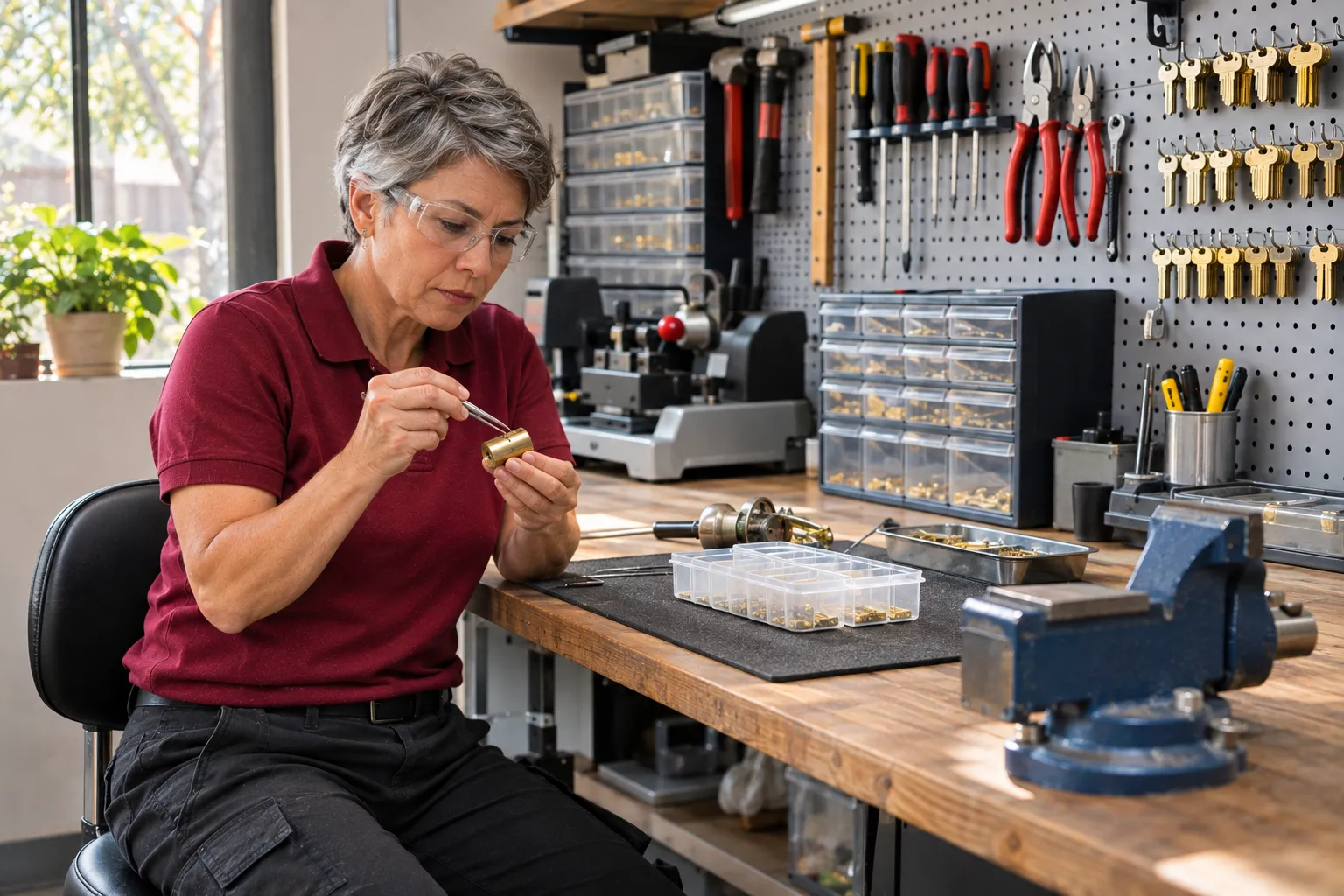
The technician first examines the lock and the position of the broken piece. The aim is to remove the fragment while preserving a working cylinder wherever its condition allows.
After extraction, the technician checks whether the cylinder turns and whether the latch or bolt operates correctly. Removing the metal is only part of the job. If the mechanism was binding before the key broke, that problem still needs attention.
A replacement key can be cut once the technician has confirmed the correct key and lock operation. The new key is tested in the lock, along with the door’s latching and locking action.
Cairn Lock & Key offers broken key extraction from $65, plus the separate $39 service call fee inside its service area. The final written price follows inspection and requires your approval before work begins.
When the lock needs more than extraction
A broken key does not automatically call for a new lock. If the cylinder remains sound and operates correctly with a properly cut key, replacing the entire assembly may be unnecessary.
A different repair may be needed when the cylinder continues sticking, its internal parts are worn, or the door and frame have shifted. Heat can make metal doors and gates expand, leaving a bolt under pressure even when the key itself is fine.
Some locks can be serviced or rekeyed. Others are too worn or damaged to repair economically. Replacement may also make sense when the existing hardware is a low security grade or its condition is poor.
The technician explains what was found and what the available repair or replacement involves. If additional work changes the original price, it requires separate approval.
Keep the replacement key working
Once the lock operates smoothly, check your remaining keys for visible wear or bending. A spare made from a worn original may carry the same problems into the next key.
For dusty keyways, graphite or a dry lubricant intended for locks is generally preferable to oil, which can hold grit. A lock that repeatedly catches still needs inspection rather than more force.
Pay attention to how the key turns and how the door closes. A working key should not need to compensate for a binding latch. Addressing that resistance can help prevent another broken key.