
Five changes worth paying attention to
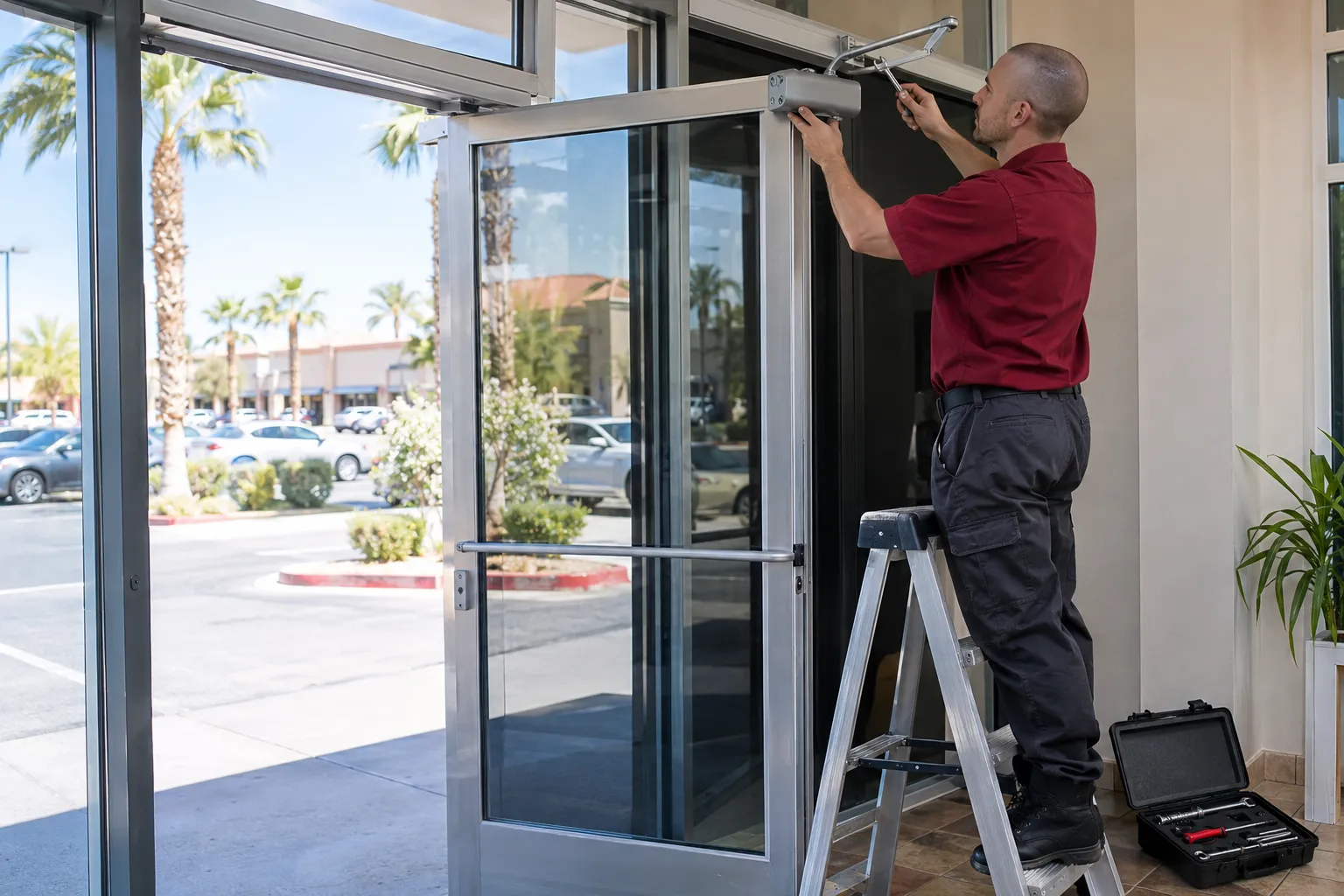
A commercial door closer regulates the movement of a door as it returns to the frame. It should control the swing and allow the latch to engage without the door slamming.
In Las Vegas, heat, dust and ordinary hardware wear can affect an entire door assembly. A closer complaint may involve the closer itself, but hinges, strikes and door alignment also deserve inspection.
These five signs are useful to record before arranging service:
- The door slams. It closes with excessive force instead of making a controlled return.
- The door does not latch. It reaches the frame but the latch fails to engage.
- Oil is leaking. Visible fluid around the closer body can indicate internal seal failure.
- The door drags. The leaf rubs against the frame or threshold during movement.
- The door will not stay closed in wind. Air movement affects whether it reaches and holds its latched position.
Several symptoms can appear together. A dragging door may also resist closing, while a leaking closer may lose the control needed for a consistent closing cycle.
Closing speed and latch speed are different
Most surface door closers have separate adjustments for closing speed and latch speed. They control different portions of the door’s return.
Closing speed governs the main swing toward the frame. Latch speed controls the final portion, when the door needs enough movement to engage the latch.
A door that slams during the main swing may need a different correction from one that approaches slowly but stops short of latching. Simply making the entire closing cycle slower does not address every problem.
The locksmith also checks whether the latch and strike align. If the door has shifted, adjusting the closer alone may leave the original fault unresolved.
Observe the symptom and leave adjustments to someone servicing the full opening, particularly on doors with exit devices or fire-rated hardware.
Know when adjustment is not enough
Some closers need adjustment because the closing action has changed over time. Others have damaged arms, worn parts or internal failures that make continued adjustment ineffective.
Oil leaking from a hydraulic closer is a particularly important distinction. Fluid loss can affect the closer’s ability to control the door. Repeated speed adjustments will not restore a failed seal.
A technician may recommend replacement when the closer can no longer maintain proper operation. The existing door, mounting arrangement and hardware application need to be examined before selecting the replacement.
Cairn services LCN and Norton door closers, including closing speed and latch speed adjustments and replacement of leaking units.
Check the rest of the opening
A closer cannot correct every fault in a commercial doorway. Loose or worn hinges, a shifted strike and contact at the threshold can interfere with closing.
Las Vegas summer temperatures can exceed 110°F. Metal doors and frames expand in the heat, sometimes causing a latch or bolt to bind. Windblown dust can also collect around moving hardware.
Wind adds another variable, particularly when a door opens onto an exposed exterior area. A closer needs to be assessed with the actual door and surrounding conditions rather than judged by its adjustment settings alone.
The technician checks how the door moves, whether it makes contact where it should and whether the latch engages after closing.
Make door checks part of maintenance
For a property with multiple commercial entrances, waiting until a closer stops operating can leave several other worn components unnoticed.
Cairn offers yearly or twice-yearly maintenance visits for business properties. Each door’s closer, lock, exit device and hinges are inspected, adjusted and lubricated as appropriate.
The business receives a written list identifying hardware that needs repair. Pricing is established per door after a walkthrough, so the manager can plan the work around the number and condition of the openings.
For a single troublesome door, note which of the five symptoms appears and whether it changes with wind or temperature. That gives the technician a useful starting point for inspection.