
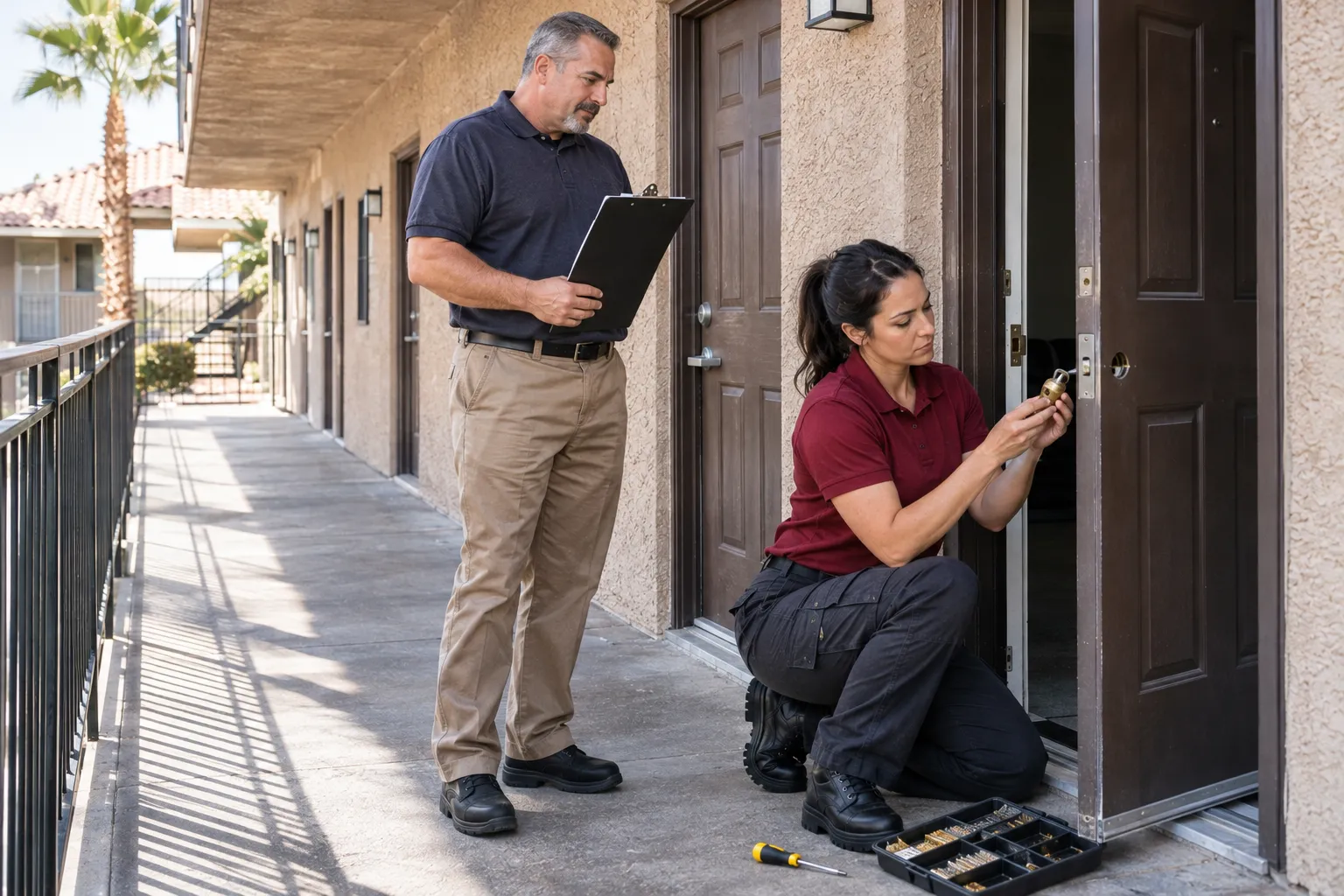
Make rekeying part of every turnover
When a Las Vegas rental changes residents, collecting the previous tenant’s keys is only one part of preparing the property. A landlord cannot determine how many copies were made during the tenancy simply by counting the keys returned.
Rekeying addresses that gap. A locksmith changes the pins inside a serviceable cylinder so the previous keys no longer operate it. The lock body and door hardware remain in place, and the incoming resident receives keys for the new combination.
This is different from replacing the entire lock. Replacement may be appropriate when the hardware is worn, damaged or unsuitable for continued use. Rekeying does not improve the strength of a low-grade cylinder, and some locks cannot be rekeyed.
Build the rekey into the turnover work order rather than leaving it until the resident arrives. The locksmith needs access to the property and clear authorization to perform the work.
Identify every lock that needs attention
Start with the unit’s entry doors. Then account for any other keyed hardware assigned to that residence, including gates and private mailboxes where applicable. A key inventory helps the manager avoid handing over a property with an overlooked cylinder.
Before scheduling, record:
- The property and unit requiring service.
- Which locks belong to that unit.
- Whether any lock is damaged or difficult to operate.
- Who can approve additional hardware work.
- Who will receive the new keys.
Not all locks can share one key. Different brands or keyways may prevent compatible keying, even when the cylinders appear similar from the outside.
Door condition matters too. A metal door or gate that binds during Las Vegas summer heat may need latch or strike adjustment. Rekeying alone will not correct a door that fails to close or latch.
Keep authorization separate from access
Landlords and managers authorize lock changes on rental property. A tenant requesting a new cylinder cannot approve that change independently unless the owner or manager has given permission.
For a resident lockout, Cairn checks government photo ID and a lease, or obtains confirmation from the landlord or manager. This establishes the resident’s connection to the property before entry.
An eviction is a separate matter. Cairn does not carry out evictions. For lock changes associated with an eviction or lockout order, the company works only with the owner or manager present or on their written request.
Keep those instructions clear on the work order. The locksmith’s responsibility is the authorized lock work, not deciding who may occupy the property.
Give maintenance access without sharing every key
Apartment communities and rental portfolios often benefit from a master key system. Each unit can retain its individual key while an authorized maintenance master operates the doors assigned to that system.
Planning starts with the people who need access. A property may need separate access groups for maintenance, management and shared facilities. Some rooms should remain outside the master key arrangement.
Master key systems require recordkeeping. Cairn maintains locked key records for these accounts and releases keys only to named authorized contacts following a signed request.
As units are rekeyed, the manager should check whether each cylinder needs to remain within the property’s existing master key plan.
Use work orders to keep the account organized
For a manager handling several properties, written instructions reduce the need to reconstruct a job after the technician leaves. Cairn accepts work orders by email and maintains a list of authorized account contacts.
Each completed job receives an itemized invoice. Approved commercial accounts can use purchase orders, receive a monthly statement per property and pay on net 30 terms. Cairn’s commercial accounts coordinator, Priya Nair, is the named contact for these accounts.
Turnover rekeying works better as a documented property process than a series of unrelated service calls. The manager should be able to identify the approved work, the unit served and the person responsible for receiving its keys.