
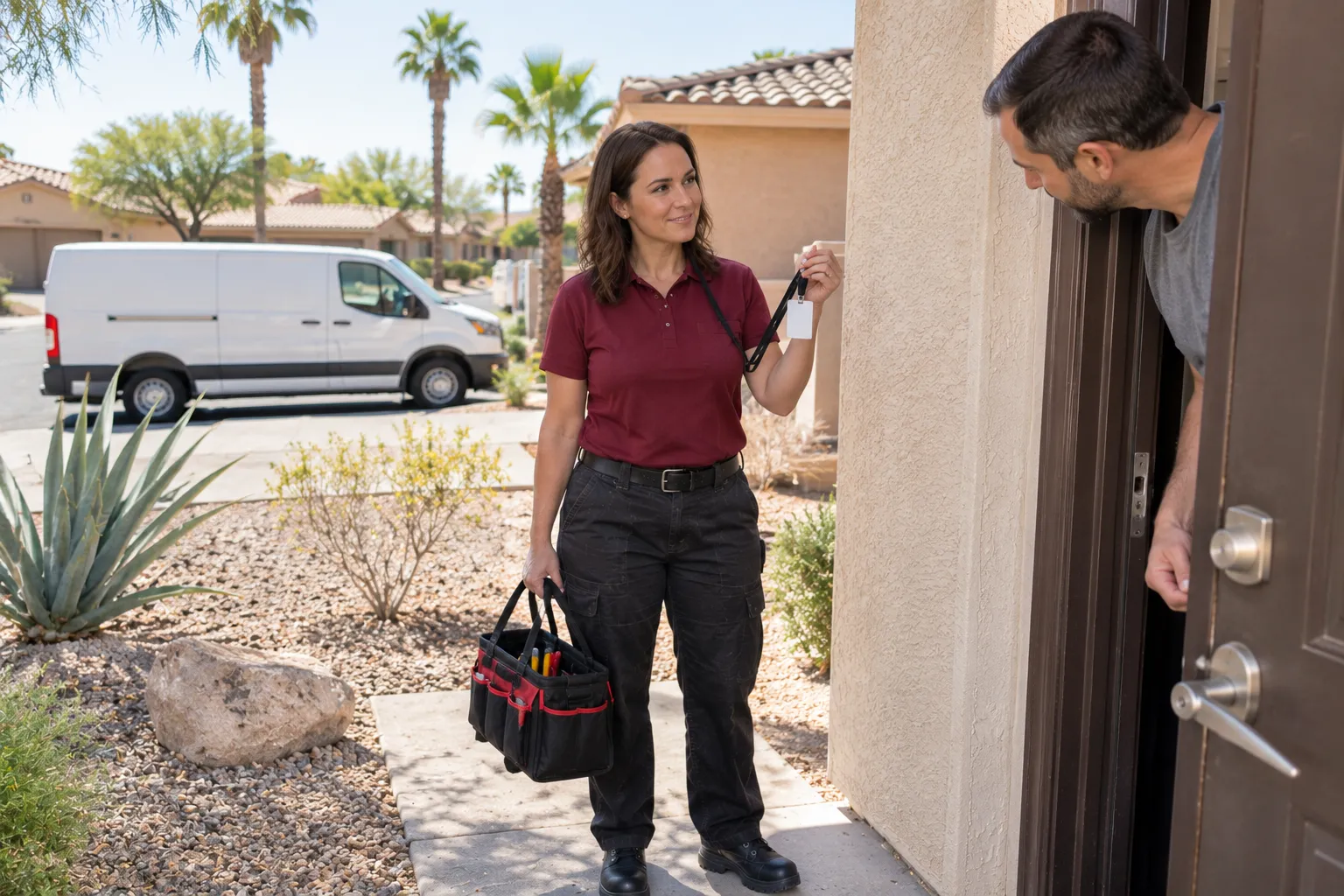
Why identification comes before entry
Checking government photo ID and a connection to the property or vehicle protects the customer. It stops someone else from having your home, vehicle, business door or safe opened without your permission. That check is part of the locksmith’s job.
The technician needs to establish who is requesting the work and why that person has authority over the lock. Photo identification establishes identity. An address, registration, lease or authorization from a responsible party establishes the connection.
The same principle applies when someone requests rekeying or replacement. Changing a lock affects who can enter afterward, so authorization matters even when the customer already has a working key.
At Cairn, the technician checks identification and the customer’s connection to the property or vehicle. The documents required depend on the job and who owns or manages the property.
What to have for a home or rental
For a home, government photo ID showing the service address establishes the connection. If the address is different, bring supporting documentation such as a utility bill, lease or piece of mail connecting you to the property.
A renter can present ID and a lease. Alternatively, the landlord or property manager can confirm the renter’s authority by phone.
Opening a rental door and changing its locks are different requests. A tenant may be authorized to enter but still need the owner’s or manager’s approval before replacing or rekeying the hardware.
If you are arranging service for someone else, explain the relationship to the property during the initial call. The dispatcher can tell you what authorization needs to be available when the technician arrives.
What happens when your ID is inside
Lockouts create an obvious problem: your wallet, registration or other papers may be behind the locked door. Tell the dispatcher before the technician is sent so the verification can take place after entry.
For a residential lockout, Cairn can open the door and inspect the identification inside before leaving. If the customer cannot produce the required proof, the technician relocks the door and charges only the service call fee.
For a vehicle, the registration or insurance card may also be inside. The technician can check those documents after entry. The registration or insurance card must be in the same name as the government photo ID.
Have the available information ready without attempting to force the door or lock. The fact that documents are inside does not remove the requirement to show them.
Business doors and safes need authority
At a business, the person requesting entry should be an owner, manager or authorized account contact. For lock changes, Cairn requires a letter or email from the business confirming permission.
For commercial property accounts, keeping an established list of authorized contacts makes service requests easier to verify. A technician still needs to establish that the particular person ordering the work has permission.
Safes require a separate check because possession of a safe does not always establish authority to open it. Cairn asks for ID and documentation showing ownership or authority over the safe. Inherited and estate safes need supporting documents.
Before the visit, identify which documents fit the situation:
- Home: photo ID and proof connecting you to the address.
- Rental: photo ID and lease, or manager confirmation.
- Vehicle: photo ID and registration or insurance card in the same name.
- Business: authorized contact and written permission for lock changes.
- Safe: photo ID and ownership or authority records.
Keep private access information private
Identification is inspected as part of verifying authority. Cairn never asks for or accepts access codes, safe combinations or copies of ID through its website. Those details are not needed to describe a lock problem or request an appointment.
When calling, describe the lock, where it is and what happened. Tell the dispatcher if your documents are inside the locked property or vehicle so the technician understands the situation before arriving.
A technician who verifies identity and authority before opening a lock is protecting the customer’s control over who can enter.