
Summer heat changes how doors fit
Las Vegas summer highs regularly pass 110°F. Exterior doors that face direct sun can become much hotter than the surrounding air, particularly when metal hardware and frames absorb the heat.
Metal expands as its temperature rises. The change may be small, but a deadbolt needs its bolt and strike opening to line up closely. A little movement can be enough to make a formerly smooth lock difficult to operate.
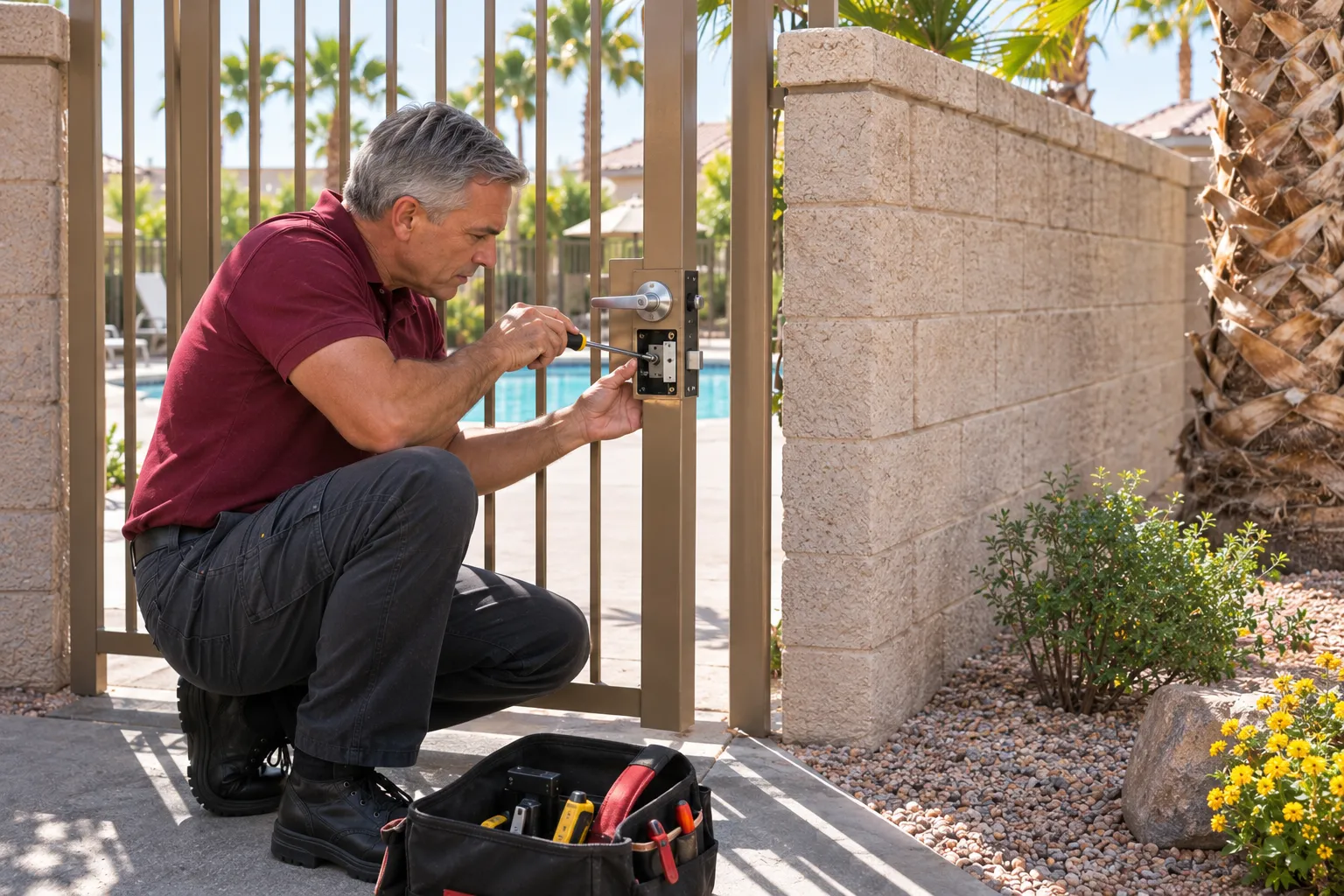
Gates are especially exposed to direct sun and windblown dust. Their metal frames can expand and shift relative to the lock hardware, leaving the latch or bolt rubbing against the strike.
The result is often mistaken for a damaged lock. The cylinder may still work properly while the door is putting pressure on the bolt.
Separate a sticking bolt from a worn lock
A deadbolt that moves freely with the door open but binds when the door is shut points to an alignment problem. The strike may need adjusting.
If the key remains difficult to turn with the door open, the cylinder or internal lock mechanism may need inspection. A worn lock can develop resistance regardless of the season.
Pay attention to where the problem occurs:
- Only when the door is shut: possible strike misalignment.
- When the door is open or closed: possible lock wear.
- During the hottest part of the day: possible expansion.
- After dusty weather: grit may be affecting the keyway.
These observations help a locksmith diagnose the issue. They are not a substitute for inspecting the bolt, strike and cylinder together.
Do not use extra force on the key to overcome resistance. A bent or broken key creates another problem inside the lock.
Dust causes a different kind of resistance
Las Vegas has low humidity and frequent windblown dust. Fine grit collects around exterior hardware and can find its way into keyways, particularly on gates and locks exposed to the elements.
The key may feel rough or inconsistent when turning. That sensation differs from a bolt that stops against the edge of the strike opening.
A dry lubricant formulated for locks is generally a better choice in dusty conditions than household oil. Graphite and suitable dry lock lubricants do not leave the same oily film that can hold grit inside the mechanism.
Use only a product suitable for the lock and follow the hardware maker’s directions. Applying more lubricant does not repair a worn cylinder or correct a misaligned strike.
If the key is already binding severely, stop using it rather than trying to work lubricant through the mechanism by force.
Alignment work is not lock replacement
A locksmith inspecting a sticking deadbolt looks at the relationship between the door, bolt and strike. Hinges, latch position and frame movement can all affect whether the hardware lines up.
When the lock is in good condition, adjusting the strike or correcting door hardware alignment may restore normal operation without replacing the cylinder.
If the internal mechanism is worn, damaged or seized, adjustment alone will not address the problem. The technician may recommend repair or replacement after inspecting the lock.
Some doors have both issues. A new deadbolt installed on a poorly aligned door may begin binding in the same way as the old hardware. The door fit needs attention before the job is considered complete.
Keep the lock working through the seasons
Las Vegas homes experience prolonged sun, dusty weather and sudden monsoon storms in July and August. Exterior locks should be checked periodically rather than only after a key becomes difficult to turn.
Operate each lock normally, note changes in resistance and watch for doors that drag or require extra pressure to latch. A sun-facing entrance may behave differently in winter than it does during the summer.
When servicing the hardware, a locksmith can inspect the cylinder, adjust the strike where appropriate and apply a lubricant suited to the lock.
Do not treat a sticking key as something to overcome with strength. Identifying whether the resistance comes from the door or the lock is the useful first step, and it may prevent an avoidable broken key.