
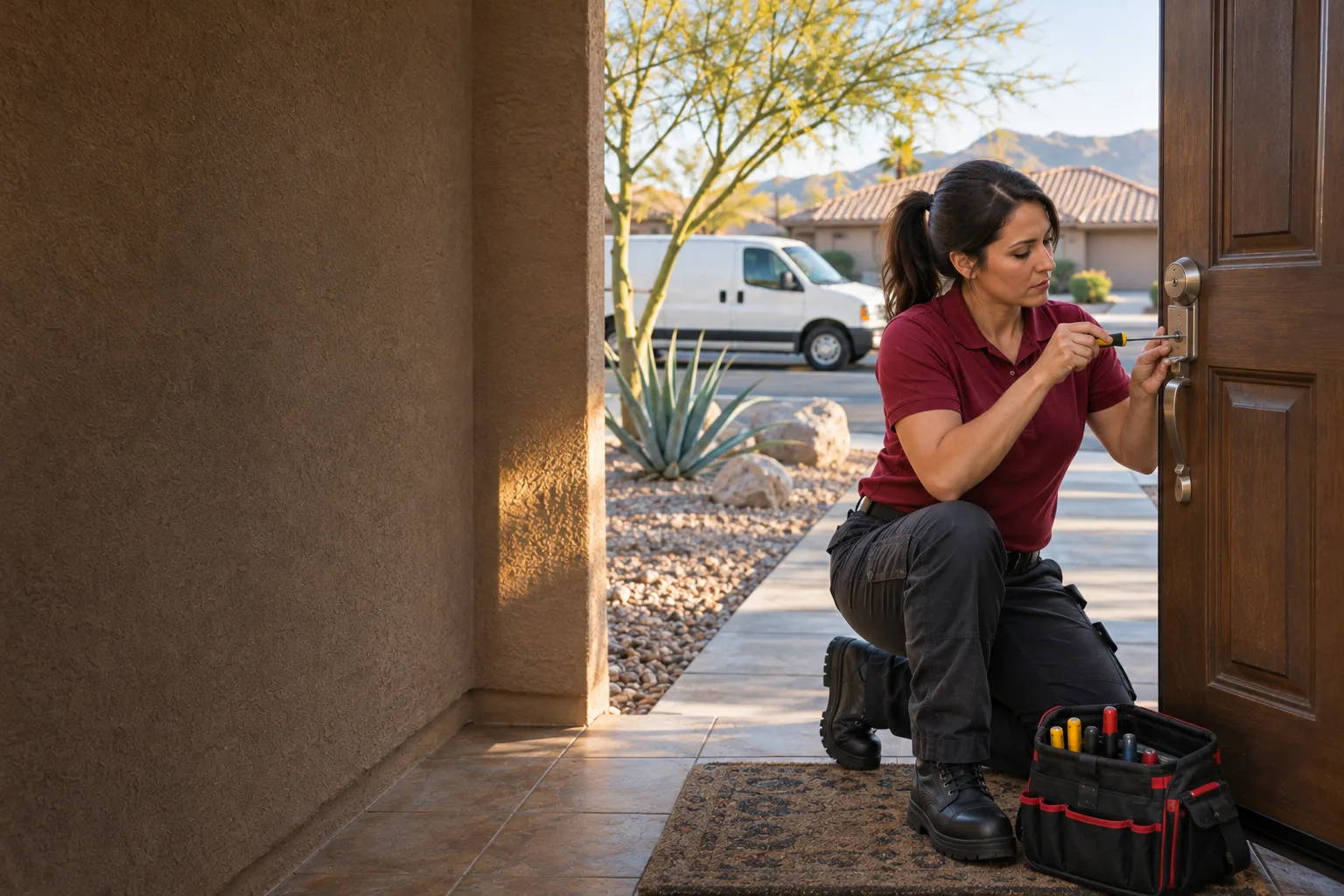
Start with every exterior deadbolt
Once a year, walk through the exterior doors of your Las Vegas home and operate each lock. Include the front entrance, rear door and any side entrance. Test the hardware with the door open before testing it closed.
A residential deadbolt should extend a full 1 inch. Watch whether the bolt moves through its full travel without sticking. Then close the door and repeat the test. You should not have to lift the handle, pull the door toward you or lean against it to turn the key or thumbturn.
If the lock operates freely with the door open but binds when closed, the door or strike may be out of alignment. If it catches in both positions, the lock itself needs closer inspection.
Do not increase pressure on a resistant key. A locksmith can check whether the cylinder, bolt or door hardware needs adjustment, repair or replacement.
Look at the strike and door fit
The strike plate is the metal fitting in the frame that receives the latch or deadbolt. Check whether it sits firmly against the frame and whether its screws are loose or missing.
A reinforced deadbolt strike should use 3 inch screws that reach the wall stud. Short screws into thin trim provide less support. Ask a locksmith to inspect the mounting if you cannot confirm how the strike is attached.
Las Vegas summer temperatures pass 110°F. Metal doors, gates and frames can expand enough to change how the latch meets the strike. A door that works in cooler weather may begin dragging or binding during the hottest part of the year.
Look for rubbing along the edges, a latch that misses its opening or a deadbolt that needs pressure to engage. Those are alignment problems worth addressing before they place additional wear on the lock.
Clean the keyway without adding oil
Windblown dust is part of life in the valley. Fine grit collects around exterior cylinders and gate locks, especially where hardware faces the wind or receives little shelter.
Check for a key that feels rough or catches during ordinary use. A dry lubricant made for locks, or graphite where appropriate, is better suited to dusty keyways than oil. Oil can retain grit and make the problem worse over time.
Use a lock product according to its directions and avoid mixing lubricants. If the cylinder remains difficult to operate, have it inspected rather than adding more material.
Also look at the finish on sun-facing hardware. Strong sunlight can fade exposed surfaces. A worn appearance alone does not establish a mechanical failure, but it is a useful reminder to check how the lock operates.
Inspect gates and smart locks
A gate latch should engage when the gate closes normally. Check whether the gate has dropped, the latch misses its catch or accumulated grit interferes with the lock.
Do the same for sliding glass door locks and secondary locking hardware. Make sure each part operates as intended without having to force the panel into position.
For smart locks, check batteries twice a year. A west or south facing door can expose the keypad and battery compartment to considerable heat. A dragging deadbolt also makes a motorized lock work harder and can shorten battery life.
Follow the lock maker’s battery guidance and confirm that the backup key works. Keep the administrative account and access codes under the homeowner’s control.
Review who can open each door
Finish the inspection with a key and code inventory. Hardware can operate correctly while the list of people with access is out of date.
Use a simple yearly checklist:
- Test each exterior deadbolt and latch.
- Check strike plates and visible screws.
- Note doors that drag or bind in summer.
- Check gate and sliding door hardware.
- Replace smart-lock batteries on schedule.
- Review issued keys, spare keys and active user codes.
If old keys are unaccounted for, rekeying may be appropriate for locks in good condition. If hardware is worn or damaged, replacement may be the better choice.
Keep a short record of anything that needs attention. An annual inspection is easier to act on when you distinguish adjustments from replacement work and decide which doors should be addressed first.