
Let the police finish first
After a break-in, contact the police and follow their instructions. Wait until officers have finished their work and said you can handle the door and lock hardware. Avoid moving damaged parts before they have had an opportunity to inspect them.
Once the police are finished, look at the door without trying to force it closed. A lock may appear damaged while the larger problem is a bent strike, loose hardware or a frame that no longer lines up with the bolt. Note anything that does not sit or move as it did before.
If you need the opening secured, call a locksmith rather than submitting a routine service request. Cairn dispatches emergency lock replacement and door-securing work throughout the Las Vegas valley.
Check what still works
A locksmith looks at more than the key cylinder. The deadbolt must extend into the strike opening, the latch must catch and the door must close without being lifted or pushed into place.
Point out any changes you noticed, including a key that will not turn, a loose handle or a door that catches on the frame. Do not repeatedly turn a damaged lock or force a misaligned door. That can make it harder to determine which parts need attention.
Keep a short record of what you see:
- Which door or gate was affected.
- Whether the key, latch or deadbolt still operates.
- Any visible damage to the lock, strike or surrounding frame.
- Whether keys are missing or their whereabouts are uncertain.
- Any photographs taken after police have finished.
These details help explain the job when you call. The final repair decision comes after the technician inspects the hardware at the property.
Restore the lock and its support
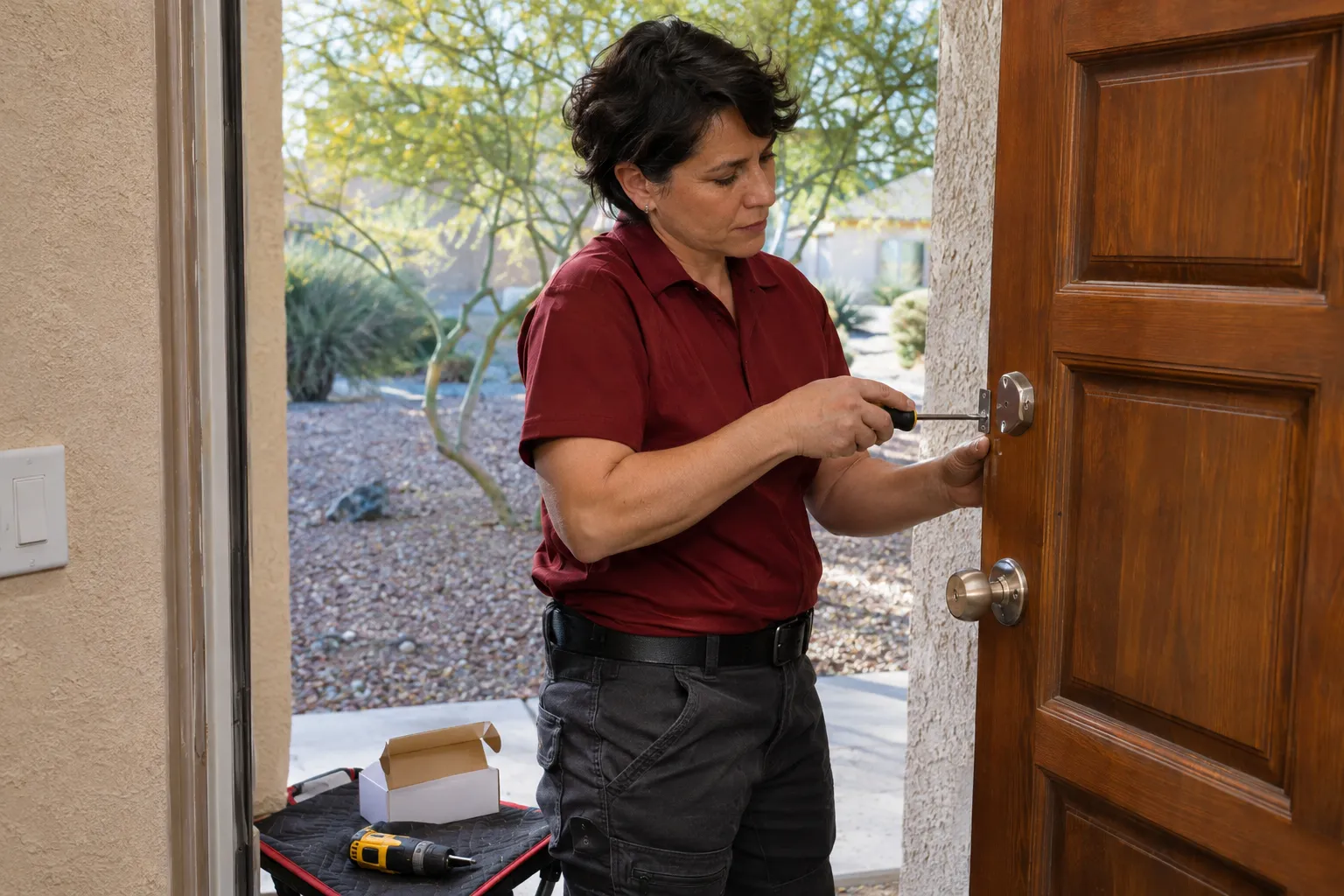
For a damaged entrance, a locksmith may install a replacement lock, a new strike plate and reinforcement hardware. A reinforced strike plate uses longer screws that reach the wall stud rather than relying only on the door trim or thin frame material.
The technician checks whether the door can still accept and operate that hardware correctly. A replacement lock cannot compensate for a door or frame that is too damaged to support it.
Cairn works on locks, strikes and related door hardware. It does not replace doors, frames or glass. If those components need replacement, arrange that work separately and coordinate the hardware fitting with the finished opening.
Before repairs begin, the technician inspects the opening and provides a written price. You approve the work, including any replacement parts. Afterward, test the latch, deadbolt and keys with the technician while the door is open and closed.
Account for keys that are missing
If keys are missing, rekeying may be appropriate for other undamaged locks at the property. Rekeying changes the cylinder so the previous keys no longer operate it, without replacing serviceable hardware.
Not every cylinder is suitable for rekeying. A damaged or worn lock may need replacement instead. Ask the locksmith to distinguish between hardware that needs physical repair and locks that only need a change in key access.
For a rental property, obtain the owner or manager’s approval before changing locks. If several people use the property, decide who should receive the replacement keys before the work is completed.
Keep records and schedule improvements
Ask for an itemized invoice showing the service call fee, labor and each part supplied. Cairn provides this record on paper or by email. Keep it with your photographs and police documentation for any insurance claim. Your insurer determines which expenses qualify under the policy.
Once the entrance works properly, consider a separate review of the remaining exterior locks. Check deadbolt throw, strike reinforcement, worn cylinders and key access. A Grade 2 or Grade 1 deadbolt, where appropriate, may be worth discussing if existing hardware is basic or worn.
There is no need to decide every upgrade during the repair visit. Separate the work required to restore a working entrance from improvements that can be inspected, priced and scheduled afterward.